
Alzheimer's Testing and Memory Evaluation in the DC Area
If you are looking for a test for Alzheimer’s disease – for yourself or someone you love – the first thing to know is that formal evaluation involves far more than a quick memory quiz. At WBMA, our Alzheimer’s testing and cognitive assessment process is designed to give families and individuals a clear, clinically grounded picture of what is actually happening in the brain.
We serve adults and older adults in Chevy Chase, MD – minutes from Bethesda and Washington, DC who want real answers – not assumptions.
- Serving Washington DC Since 2009
- Founded by Dr. Gonzalo Laje, MD, PhD
- Board-Certified Psychiatrists

Recognized Leaders in Mental Health Care






What Our Alzheimer's and Dementia Testing Involves?
A proper dementia testing process goes far beyond a 10-minute quiz. Our evaluation is built to find answers – including ruling out treatable causes like depression, thyroid dysfunction, vitamin B12 deficiency, medication side effects, or sleep disorders that can all produce Alzheimer’s-like symptoms.
Your evaluation at WBMA includes:
Clinical intake
Medical history, medications, family history, and a full account of what’s changed and when. Caregiver observations are actively welcomed here.
Neuropsychological testing
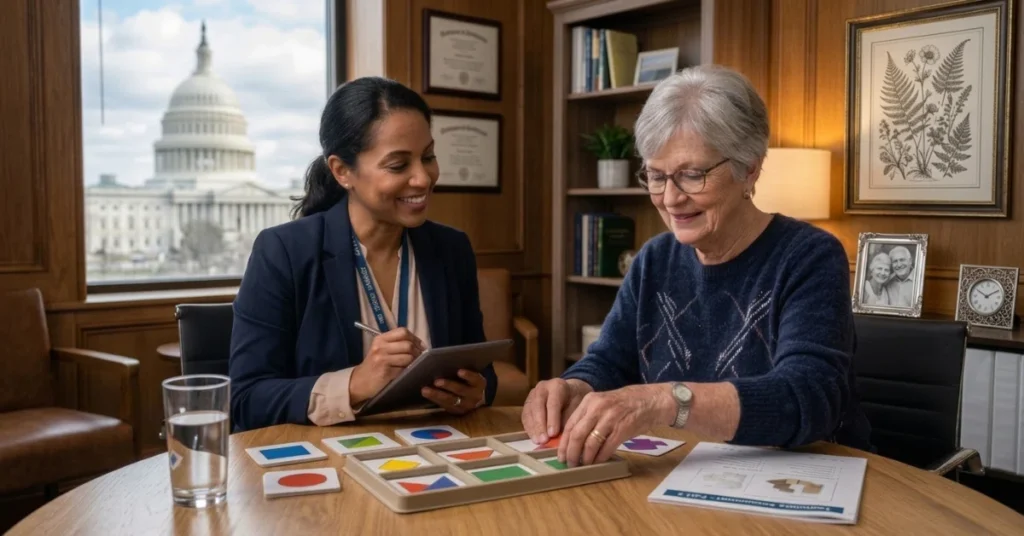
Standardized assessments measuring memory, attention, language, processing speed, and executive function across multiple domains.
Functional review
How cognitive changes are affecting daily life, not just test scores.
Written report
Findings in plain language, with clear recommendations for next steps.
Family feedback session
Results reviewed together so everyone leaves with a shared understanding of what was found.
What Alzheimer's Evaluation Can Tell You?
An evaluation does not prevent cognitive decline or guarantee a specific outcome – but it gives you something actionable: a clear clinical picture of what’s happening right now.
- Whether changes reflect normal aging or something that warrants attention
- Whether a treatable condition is driving the symptoms
- Whether findings are consistent with Alzheimer’s disease, another dementia type, or mild cognitive impairment (MCI)
- What accommodations, referrals, or care planning steps make sense at this stage
A negative finding has real value too – because it opens a different, often more manageable, path forward.
Individual results may vary. Evaluation findings support clinical decision-making and care planning – not a guaranteed diagnosis or prediction of future progression. Always consult a qualified healthcare provider.
Signs It May Be Time for Alzheimer's Testing
According to the Alzheimer’s Association, these patterns warrant a clinical evaluation – not just reassurance:
- Repeating questions or forgetting recent information
- Difficulty with familiar tasks – finances, cooking, driving
- Confusion about time, dates, or location
- Trouble finding words or following conversations
- Personality or mood changes that feel out of character
- Withdrawal from activities once enjoyed
One or two isolated incidents rarely point to Alzheimer’s. A pattern that’s worsening – that’s the signal.
Led by a Physician Who Has Researched the Brain
Dr. Gonzalo Laje, WBMA’s Medical Director, contributed to a large-scale genetic study on hippocampal volume published in Nature Genetics (2012). The hippocampus is the first brain region affected in Alzheimer’s disease. He also contributed to the ENIGMA Consortium, a multi-site neuroimaging and genetics research initiative published in Brain Imaging and Behavior (2014). Both publications are listed on WBMA’s research page.
This level of scientific engagement with brain and cognitive research is rare in a private psychiatric practice.

Why Choose WBMA for Alzheimer's Cognitive Assessment in the DC Area
The CDC lists Alzheimer’s disease among the leading causes of death in the United States. The Alzheimer’s Association estimates approximately 6.9 million Americans age 65 and older are currently living with the condition. Earlier evaluation means more time to plan.
Integrated care
Psychiatry, therapy, and neuropsychological testing under one roof. If findings point to a co-occurring condition, those services are already here.
Caregiver-inclusive
Family input welcomed and incorporated, not treated as secondary.
Clear written reports
Findings in language you can act on and share with other providers.
Research-grounded leadership
Led by a physician with peer-reviewed contributions to brain and cognitive science.
Located in Chevy Chase, MD
On the DC/Maryland border, minutes from Bethesda, Potomac, Rockville, and Washington, DC
Frequently Asked Questions
What does a test for Alzheimer's disease actually involve?
It’s not a single exam – it’s a structured evaluation combining clinical history, standardized neuropsychological testing across multiple cognitive domains, behavioral review, and a findings session. At WBMA, every evaluation ends with a written report and a feedback session for the patient and family.
What is a memory test for dementia and who needs one?
A memory test for dementia assesses whether cognitive changes – memory loss, confusion, difficulty with tasks – reflect a neurodegenerative condition or a different, potentially treatable cause. It’s appropriate for any adult or older adult with progressive cognitive concerns, or for a family member who has noticed changes the person themselves may not recognize.
Is memory loss always Alzheimer's disease?
No. Depression, thyroid dysfunction, B12 deficiency, medication side effects, and sleep disorders can all produce symptoms that look like early Alzheimer’s. Ruling these out is one of the most important parts of a proper dementia evaluation – and finding a treatable cause is a meaningful outcome in its own right.
Can family members be part of the evaluation?
Yes – and we actively encourage it, with the patient’s consent. Caregiver input often provides diagnostic context that no test can capture alone. Family members can also attend the feedback session to review findings and discuss next steps together.
What happens after Alzheimer's testing is complete?
You receive a plain-language written report with specific recommendations. Depending on findings, next steps may include additional medical workup, referral, care planning resources, or access to WBMA’s psychiatry or therapy services within the same practice. If Alzheimer’s is not indicated, we explain what findings do suggest and whether monitoring over time makes sense.
What's the difference between Alzheimer's testing and neuropsychological testing?
Neuropsychological testing is the assessment method – standardized tools measuring cognitive function. Neuropsychological testing is the clinical foundation of our Alzheimer’s evaluation; the two are part of the same integrated process at WBMA.
Does WBMA accept insurance for this evaluation?
Coverage varies by plan. Contact us before scheduling to discuss your insurance situation – our team can clarify what to expect on costs and coverage. Get in touch here.
Schedule Dementia Testing at Our Chevy Chase Location
If you’re noticing signs of memory loss or cognitive change in yourself or a loved one, get a clinical picture before the situation becomes a crisis.
WBMA is a dementia specialist practice and memory clinic in Chevy Chase, MD – serving patients and families looking for Alzheimer’s testing near me, dementia testing near me, or a full memory evaluation near Bethesda and Washington, DC.
This page is for educational purposes and does not replace a professional consultation. Schedule an evaluation to discuss whether this assessment is right for you or your family member.