
Cognitive and Memory Evaluation in the DC Area
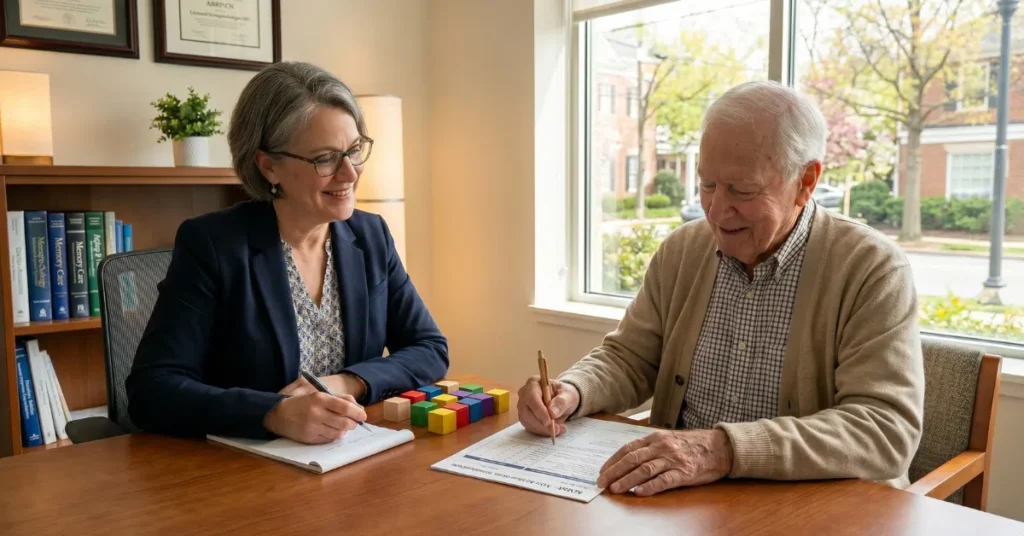
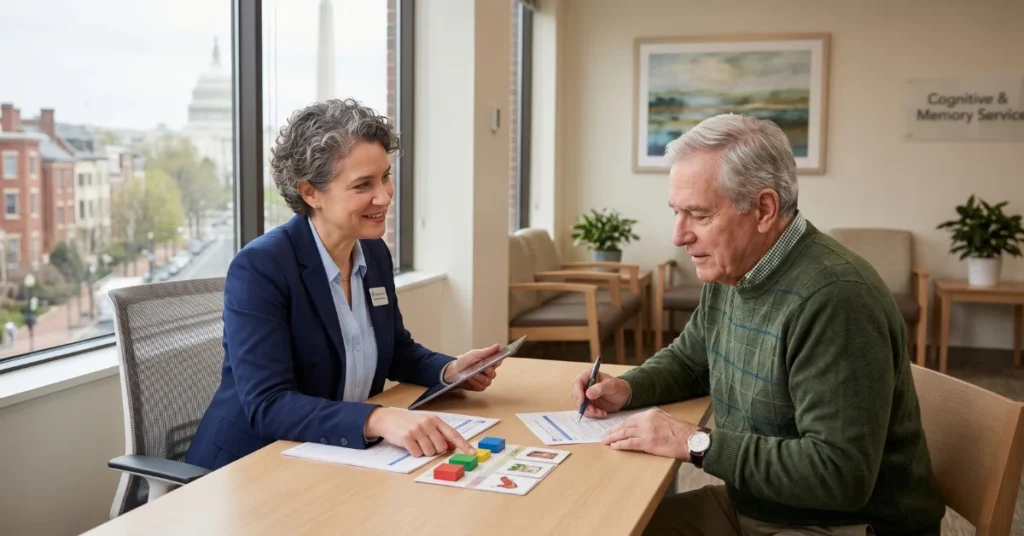
Memory lapses, difficulty concentrating, or changes in thinking that weren’t there before – these concerns deserve a clinical answer, not a guessing game. WBMA offers cognitive and memory evaluation for adults in Chevy Chase, MD, administered by trained neuropsychologists who turn findings into a clear picture of what’s happening and what to do next.
- Serving Washington DC Since 2009
- Founded by Dr. Gonzalo Laje, MD, PhD
- Board-Certified Psychiatrists
Recognized Leaders in Mental Health Care






What This Cognitive Evaluation Can Help Identify?
Our cognitive and memory evaluation is a structured, multi-domain assessment – not a brief screening. Depending on the clinical question, it may help identify or rule out:
Mild Cognitive Impairment (MCI)
Changes beyond normal aging, not yet dementia.
Alzheimer’s disease
Early evaluation supports better planning and care access, per the National Institute on Aging.
Other forms of dementia
Vascular, Lewy body, frontotemporal.
Mood-related cognitive symptoms
Depression and anxiety can mimic cognitive decline.
Post-COVID brain fog
Attention, processing speed, and word retrieval difficulties.
Cognitive effects of brain injury
TBI-related memory and attention changes.
What the Cognitive and Memory Evaluation Measures?
Testing covers the core cognitive domains most relevant to memory concerns and aging-related decline. A trained neuropsychologist selects the battery based on your specific clinical question.
- Memory – immediate and delayed recall, verbal and visual
- Attention and processing speed
- Executive function – planning, problem-solving, working memory
- Language – word retrieval, fluency, comprehension
- Visuospatial skills
- Mood and behavioral factors – anxiety and depression affect cognitive scores
All results are compared against age-matched norms – placing your performance in a clinically meaningful reference frame, not judged in isolation.
Signs It May Be Time for a Cognitive Assessment
Most people come to us after noticing a pattern over months, not a single incident. Common signs include:
- Frequent memory lapses – misplacing items, repeating questions, losing track of recent events
- Attention and focus changes – difficulty finishing tasks or following conversations
- Word-finding problems – pausing for familiar words, substituting the wrong ones
- Executive function decline – planning, organizing, or decisions that feel harder than before
- Confusion in familiar places or about recent events
- Cognitive changes after a medical event – stroke, TBI, or COVID-19
- Family concern about a loved one’s memory or judgment
Dr. Gonzalo Laje's Research in Brain Function and Cognitive Health
Dr. Gonzalo Laje, WBMA’s founder and medical director, spent nearly a decade as an Associate Clinical Investigator at the National Institute of Mental Health (NIMH), where his work focused on pharmacogenetics, neuroimaging, and psychiatric treatment outcomes. His 57+ peer-reviewed publications include research directly relevant to brain function and cognitive health:
- “Brain-Derived Neurotrophic Factor and Antidepressant Efficacy” (Biological Psychiatry, 2012) – on brain plasticity and cognitive resilience. View on PubMed
- “National Trends in the Outpatient Treatment of Children and Adolescents With Antipsychotic Drugs” – on psychiatric medication effects on developing cognition. View on PubMed

Why Patients Choose WBMA for Cognitive and Memory Assessment
A memory evaluation is most useful when it connects to clinical resources beyond the test itself. WBMA offers that connection within a single coordinated practice.
Integrated care
Psychiatry, therapy, and neuropsychological testing under one roof. If findings point to a co-occurring condition, those services are already here.
Caregiver-inclusive
Family input welcomed and incorporated, not treated as secondary.
Clear written reports
Findings in language you can act on and share with other providers.
Research-grounded leadership
Led by a physician with peer-reviewed contributions to brain and cognitive science.
Located in Chevy Chase, MD
On the DC/Maryland border, minutes from Bethesda, Potomac, Rockville, and Washington, DC.
Not Sure Which Evaluation You Need?
WBMA offers two distinct evaluation services for memory and cognitive concerns. The right starting point depends on how specific your clinical question is.
Cognitive and Memory Evaluation
- You’re noticing changes in memory, attention, or thinking but aren’t sure what’s behind them
- The concern could have several possible causes – mood, brain fog, MCI, or multiple types of dementia
- You need a broad assessment to identify or rule out conditions before a more targeted workup
Alzheimer's Testing and Memory Evaluation
- Your concern is specifically Alzheimer’s disease
- You have a family history, a physician’s recommendation, or memory patterns pointing in that direction
- You need an evaluation structured around Alzheimer’s assessment and progression
Frequently Asked Questions
How is this different from the neuropsychological testing service?
It’s not a single exam – it’s a structured evaluation combining clinical history, standardized neuropsychological testing across multiple cognitive domains, behavioral review, and a findings session. At WBMA, every evaluation ends with a written report and a feedback session for the patient and family.
Does WBMA accept insurance?
A memory test for dementia assesses whether cognitive changes – memory loss, confusion, difficulty with tasks – reflect a neurodegenerative condition or a different, potentially treatable cause. It’s appropriate for any adult or older adult with progressive cognitive concerns, or for a family member who has noticed changes the person themselves may not recognize.
How long does the evaluation take?
No. Depression, thyroid dysfunction, B12 deficiency, medication side effects, and sleep disorders can all produce symptoms that look like early Alzheimer’s. Ruling these out is one of the most important parts of a proper dementia evaluation – and finding a treatable cause is a meaningful outcome in its own right.
Can this evaluation identify Alzheimer's disease?
The evaluation provides detailed cognitive data that contributes to an Alzheimer’s assessment, but a formal diagnosis requires medical input from neurology and may include neuroimaging. Per the National Institute on Aging, early evaluation supports better planning. Results are shareable with your full care team.
Do I need a referral?
You receive a plain-language written report with specific recommendations. Depending on findings, next steps may include additional medical workup, referral, care planning resources, or access to WBMA’s psychiatry or therapy services within the same practice. If Alzheimer’s is not indicated, we explain what findings do suggest and whether monitoring over time makes sense.
What happens after the evaluation?
Neuropsychological testing is the assessment method – standardized tools measuring cognitive function. Neuropsychological testing is the clinical foundation of our Alzheimer’s evaluation; the two are part of the same integrated process at WBMA.
Schedule a Memory and Cognitive Evaluation at our Chevy Chase Location
Memory and cognitive concerns deserve a clear clinical answer. WBMA’s cognitive and memory evaluation gives you objective findings, a written report, and a direct path to the right next step.
Individual results and recommendations vary. This evaluation informs care planning and does not replace a full medical workup.